


Your stem connects the steerer tube to the handlebars, and its length has a direct effect on how your bike steers and how your weight sits over the front wheel. This MTB stem length guide explains what stem length does, how it works with rise, stack and bar width, and how to choose the right length for your riding.
What MTB stem length does
Stem length is measured from the centre of the steerer tube to the centre of the handlebar clamp. It changes two things at once:
- Steering. A shorter stem puts the bars closer to the steering axis, so steering feels quicker and more direct with smaller hand movements. A longer stem slows steering down and makes it feel calmer.
- Reach and weight distribution. A longer stem moves your hands further forward, stretching you out and putting more weight on the front wheel. A shorter stem brings your hands back, letting you stay more centred and making it easier to lift the front.
Modern mountain bikes are designed with longer reach and slacker head angles than older bikes, so they're built around short stems. That's why most current trail, enduro and downhill bikes use stems in the region of 30–50 mm.
How to choose your MTB stem length
There's no single correct length, but these points will help:
Start with your frame
Frame reach has the biggest effect on how roomy your bike feels. If your bike already feels the right size, a short stem keeps the handling the designer intended. If you're between frame sizes, a slightly longer or shorter stem can help fine-tune fit, but it won't fix a frame that's clearly the wrong size.
Think about your riding
- Downhill, freeride and bike park: short stems are the norm. They keep steering sharp at slow speeds and help you stay centred on steep ground.
- Enduro and aggressive trail: short stems are also common. Most riders prioritise descending confidence.
- Cross-country and long climbs: some riders prefer a slightly longer stem to keep weight over the front wheel on steep climbs.
Consider your handlebar width
Bar width and stem length work together. Wider bars need bigger arm and hand movements to steer, which calms the steering, and a short stem quickens it again. Many riders find that a short stem with a wide bar gives a stable but responsive feel. Our MTB handlebar width guide covers choosing width in more detail.
Rise and stack: the other numbers
Length isn't the only stem measurement that matters:
- Rise is the angle of the stem relative to the steerer. A 0° stem sits perpendicular to the steerer and keeps the bars low and direct. Positive-rise stems lift the bars.
- Stack is the height of the stem's steerer clamp. It affects how many spacers you need and how much steerer tube the stem covers.
If you want a higher front end, you can usually achieve it with handlebar rise or headset spacers rather than a rising stem. For example, our GCS handlebars come with 20 mm or 40 mm rise.
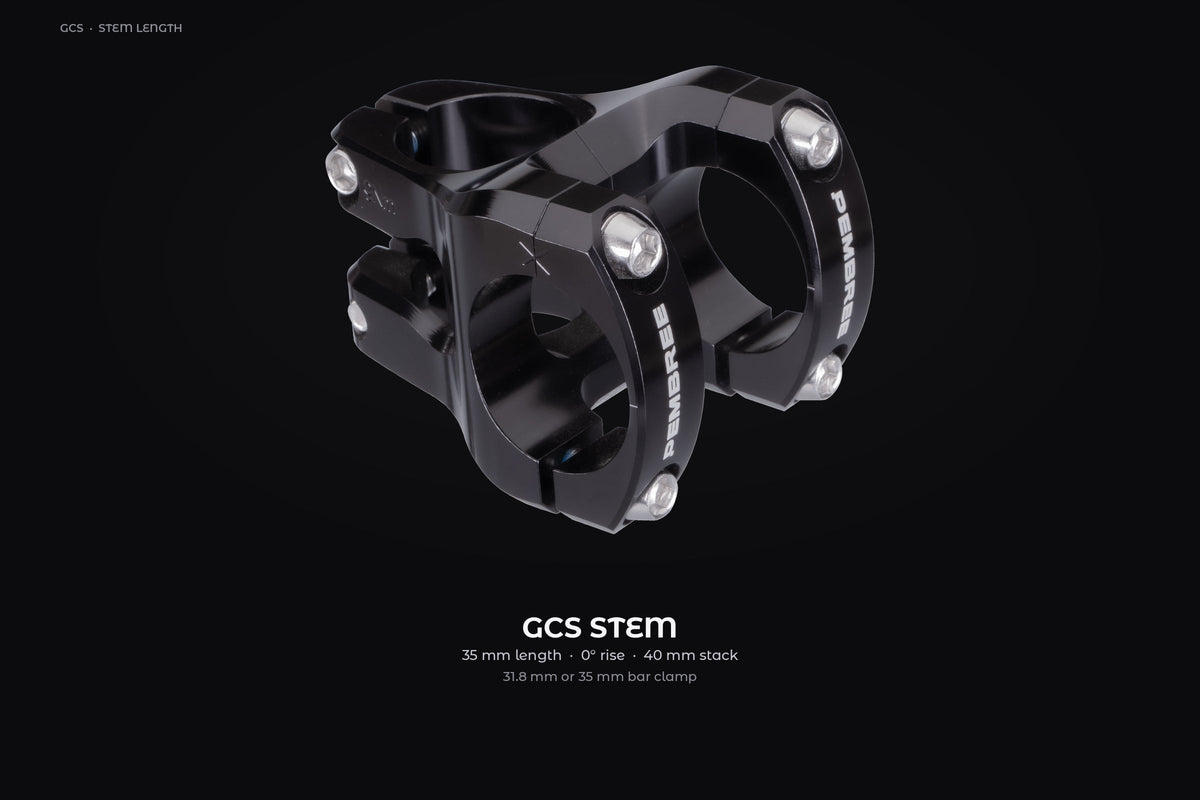
The GCS stem: 35 mm long, 0° rise
Our GCS stem is a 35 mm length stem with 0° rise and a 40 mm stack. It's rated for downhill (DH) use as well as freeride and enduro riding, and is certified to EFBE TRI-TEST® GR, the gravity standard for those disciplines. It isn't a downhill-bike stem as such: DH bikes with dual-crown forks use direct-mount stems, which PEMBREE doesn't make.
It's available in 31.8 mm and 35 mm bar clamp, has a wide clamping area to hold the bar securely, and uses M6 stainless steel bolts with washers. Machined alignment marks on the body and faceplate make it easy to centre your bars. It comes in six colours.
A 35 mm length suits riders who want quick, precise steering and a centred position on modern, long-reach bikes.
How to tell if your stem is the wrong length
Signs your stem may be too long:
- You feel stretched out and struggle to get your weight back on steep descents.
- Steering feels slow or heavy in tight corners.
- The front end feels like it wants to tuck under you on steep ground.
Signs your stem may be too short:
- The front wheel wanders or lifts on steep climbs.
- You feel cramped, with your knees close to the bars when standing.
- Steering feels nervous at higher speeds.
Change one thing at a time and ride familiar trails to compare.
Fitting your stem
Whatever length you choose, fit it carefully: set the headset preload correctly, align the stem with the front wheel, centre the bar using any alignment marks, tighten faceplate bolts evenly and use a torque wrench set to the manufacturer's specified torque. PEMBREE recommends 9 Nm for both the steerer clamp bolts and the faceplate bolts on the GCS stem. Make sure your bar and stem clamp sizes match. Our 31.8 vs 35mm handlebar clamp guide explains the difference.
Frequently asked questions
What length stem should I use on my MTB?
Most modern trail, enduro and downhill bikes use stems around 30–50 mm. Start with the length your bike was designed around, then fine-tune for fit and feel.
Does a shorter stem make steering faster?
Yes. A shorter stem needs smaller hand movements to turn the bars, so steering feels quicker and more direct.
Is a 35mm stem too short for trail riding?
Not necessarily. Many modern trail bikes are designed around short stems. If you ride a lot of steep climbs, you may prefer a little extra length, but for descending, a 35 mm stem is a popular choice.
What's the difference between stem length and stack?
Length is measured from the centre of the steerer tube to the centre of the handlebar clamp. Stack is the height of the stem's steerer clamp.
What length is the GCS stem?
35 mm, with 0° rise and a 40 mm stack, in 31.8 mm or 35 mm clamp.
See the GCS 35 mm MTB stem.
Seatpost clamp size guide: how to measure your frame
What size flat pedals do I need? Pedal size by shoe size